Henry's Lime Tilia henryana


Example photos only. Size, stem height and habit may vary.
Please contact us for photos of current stock.


Out of Stock
We are currently either out of stock or have low stock of this product. However, we may be able to fulfil your order. Please contact us to provide your details and we will get in touch asap with details of when we might have them in stock again.
Product Description
TILIA HENRYANA – Henry's Lime
Characteristics
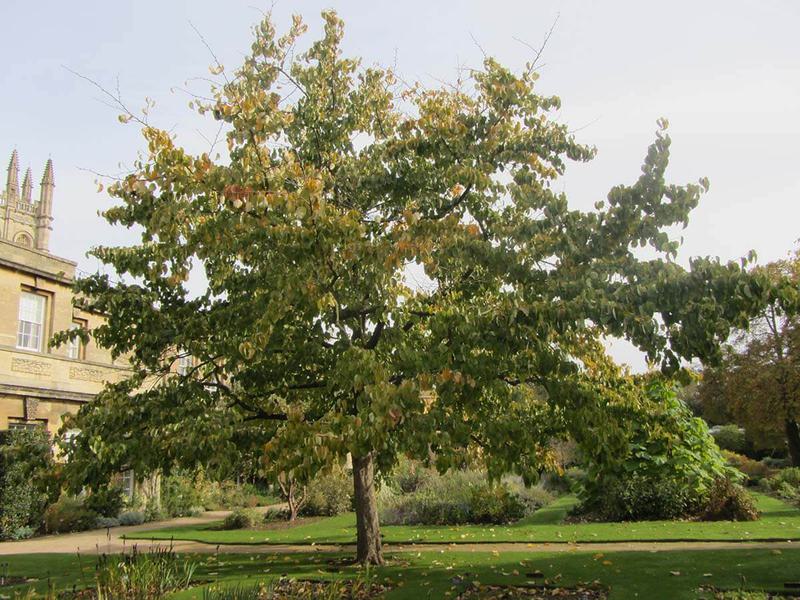
Tilia henryana, commonly known as Henry's Lime, is a deciduous tree with a spreading habit and attractive, densely textured foliage. At maturity, Tilia henryana can reach approximately 25 m in height, but more slowly than our native Small Leaved Lime.
The young leaves emerge in spring with striking pinkish-red tones and a soft, downy texture, gradually becoming glossy dark green as they mature. The broadly oval leaves can reach around 13cm in length and have an unusual margin lined with long, bristle-like teeth, giving the foliage a distinctive appearance. In autumn, the leaves turn yellow before falling.
One of its most valuable features is its late flowering period. Fragrant, creamy-white flowers are produced in dense, drooping clusters in late summer and early autumn, often flowering into September and making this one of the latest-flowering limes.
Where to grow
Lime trees will grow in in all soil types, but prefers a well-drained site.
Did you know?
Tilia henryana was discovered in China by the plant collector Augustine Henry, who collected the species in Hubei in the late 19th century. It was later named in his honour.
Features
-
Mature Height
- Very Large - 20 metres+
-
Spread
- 10-15metres
-
Shape / Habit
- Round Headed
- Broad headed
-
Growth Rate
- Medium
-
Soil Type
- All soil types
-
Sun Levels
- Full sun
- Partial shade
-
Difficulty / Hard to Grow
- Easy
-
Evergreen / Deciduous
- Deciduous
-
Autumn Colour
- Yellow
-
Leaf Colour
- Green
-
Foliage
- Dense
- Large Leaves
-
Flowering Month
- August
- September
-
Uses
- Parkland Tree
- Country/Farmland
- Encourages wildlife
- Bee Friendly
-
Scent
- Scented Flowers
-
Thorny
- No
-
Season
- Autumn
- Summer
Aftercare
For the continued healthy growth of your trees, shrubs or hedging it is vital that you follow the advice below.
Watering
The main reason that plants die within 12 months of having been planted is lack of water. It is essential throughout the spring and summer, to give a heavy enough watering to enable the water to penetrate right down to the deepest root level of the tree. In hot dry spells give the equivalent of 2 bucketfuls every three days.
Weed Control
One of the most common causes of lack of water is competition from grass. When trees are first establishing, the grass roots would be at the same level as the tree roots and are far more efficient at taking up water and thus choke the tree. It is vital that for at least 3 years after planting your tree or hedge has a circle or strip one metre wide completely free of grass.
- Mulch mats are an effective way to stop grass and weeds, although they will require a careful eye to make sure they continue to work. After clearing the ground around the tree, firmly fit the mat by tucking the edges into the soil and put a thick layer of bark mulch on top of this. Be careful not to allow the woodchip to touch the stem as it can cause rot.
- Weed killer is very effective, however it is harmful to the environment. Organic weed killers usually do not kill roots. Weed killer needs to be applied each year for the first 3 years, preferably when the tree is dormant, or just once before applying a mulch mat.
- Mowing or strimming is NOT an answer to the problem. Each time you mow, the grass will grow back more vigorously and strimming invariably leads to lacerated trunks.
Staking
If trees are not correctly secured they will rock in the planting pit. Roots not firmly in contact with the soil are unable to take up moisture and nutrients, resulting in die back or death of the tree. Check, particularly after windy weather, that stakes are still solidly in the ground keeping the base of the trunk firm. The purpose of the stakes is to anchor the roots. Flexing in the wind, higher up the trunk, is not necessarily a problem if the roots are firm.
Bellow is list of the correct system to use to secure your trees.
- 40/60, 60/80, 80/100 whips - Unless rabbit/deer problem no need to stake.
- 100/125, 125/150 1.2m Cane and Easi tie.
- 150/175 1.2m square stake and a buckle tie and spacer.
- 175/250, 6/8, 8/10 15L 1.65 Tree stake and a buckle tie and spacer.
- All larger trees. 2 x 1.65 Tree stake and cross rail with 38mm cushion spacer and 1m of 38mm strapping.
Ties
Always use our recommended tree ties or strapping. These are designed and manufactured with the correct amount of give to hold the tree firm without strangling it. They should be checked at the end of each growing season for adjustment as the trunk thickens. Non proprietary materials such as baler twine will cut into the bark and should not be used.
Protection from Animal Damage
Rabbits, deer, sheep, cattle and horses can all potentially damage trees. Ask us for advice on the most appropriate guards for your trees or hedge. Squirrels are also a terrible pest when trees get to about 20ft tall but there is no protection available.
Are the delivery costs the same no matter how many plants I order?
Yes the delivery costs stay the same no matter how many plants you have on your order. They are worked out based on your distance from our nursery and can be found here.